Understanding German Eingewöhnung
Eingewöhnung is the structured settling-in period that begins almost every German Kindergarten journey. Rather than dropping your child off on day one and leaving, you and your child arrive together and stay for short, gradually lengthening visits. The goal is simple: your child learns that this new place is safe, and that a trusted caregiver there can comfort them when you are not in the room.
Two well-known frameworks shape how this is done. The Berliner Eingewöhnungsmodell follows clear phases: a few days where you stay close, a first short separation that is carefully observed, and a stabilisation phase where the educator gradually takes over comforting. The Münchner Eingewöhnungsmodell places more emphasis on the child exploring the group and the daily routine at their own pace, with other children helping the newcomer feel at home. Ask your Kita which model they follow so you know what to expect.
Creating Gentle Goodbye Rituals
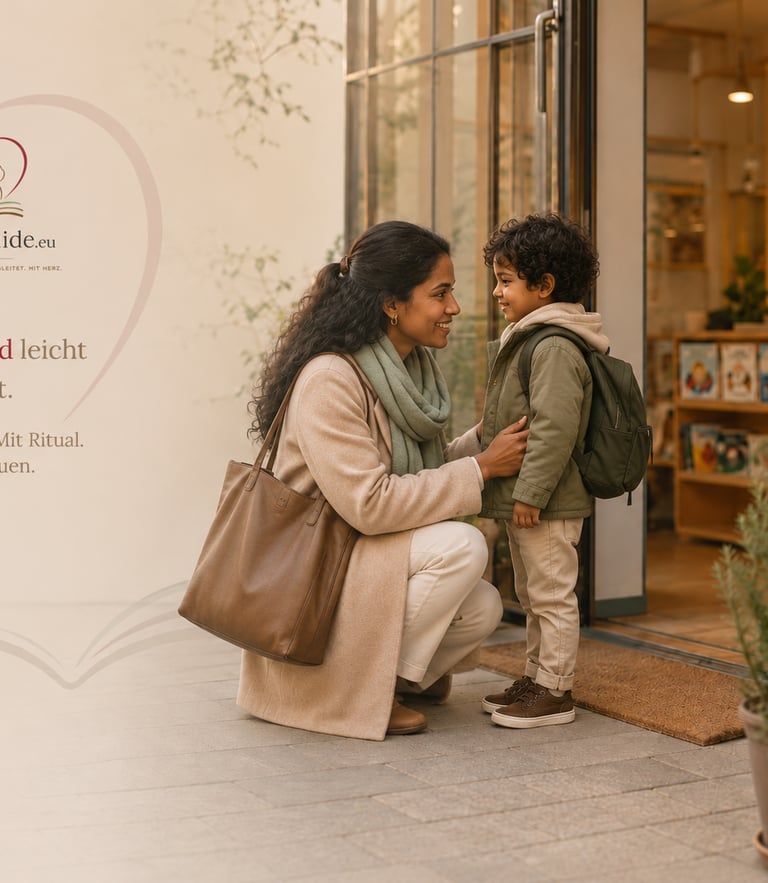
A predictable goodbye is one of the kindest things you can give an anxious child. Instead of slipping away or drawing the moment out, create a short ritual you repeat every single day: a hug, a specific phrase, a wave from the same window. The ritual tells your child exactly what will happen and, crucially, that you always come back.
Keep it warm but brief. Long, tearful goodbyes signal to your child that something really is wrong, while a calm, confident exit reassures them that you trust this place. Hand your child to the educator, say your phrase, and go. It often helps to tell your child when you will return in terms they understand, such as after snack time or after the garden.
Preparing for Kindergarten at Home
The days before Kindergarten begins are a chance to gently rehearse the new routine. Talk about Kindergarten in warm, matter-of-fact language, read picture books about starting Kita, and let your child meet the building and garden if a visit is possible. Familiarity turns the unknown into something ordinary.
Small practical habits help too. Practise putting on shoes and jackets, using the toilet independently, and eating in a group setting. Shift bedtimes and wake-up times towards the Kindergarten schedule a week or two in advance so the first mornings feel calmer. None of this needs to be perfect, it simply gives your child a comforting sense of what is coming.
Questions to Ask Your German Educators
A short, friendly conversation with the educators at the start builds the partnership that carries your child through the year. Good questions to ask include: How do you usually structure the Eingewöhnung, and how long does it tend to take? How will you comfort my child if they cry? How and when will you let me know how the day went?
It also helps to share what makes your child feel safe: their comfort object, favourite games, any words they use for the toilet or for being tired, and any allergies or routines that matter. A few key German phrases go a long way, but do not worry about perfect grammar. Educators appreciate parents who communicate openly far more than parents who speak flawlessly.
Handling Crying at Drop-Off
Tears at drop-off are normal and, in most cases, short-lived. Crying is how a young child expresses a big feeling, not a sign that you are doing something wrong. Acknowledge the feeling calmly: I can see you feel sad, and I am coming back after lunch. Naming the emotion helps far more than rushing to make it disappear.
Trust the educator to take over. Once you have said your goodbye, a lingering parent usually makes the crying last longer. Most children settle within a few minutes of a parent leaving, and educators are experienced at offering comfort. Ask them to text or tell you how quickly your child calmed, it is often reassuringly fast. If distress is intense and lasting for weeks, talk it through with the team and adjust the pace together.